
Associate Professor of Computer Science
AI Researcher · AIIS Lab Director · Author
Fresno State
Rage Against the Autonomous Machine
AI, power, autonomy, and the future of society
CRC Press, 2026

Artificial intelligence • Intelligent Systems • AI for Science & Sustainability • AI & Society
Students: Research opportunities available → Agentic AI, machine learning, vector databases, and web development
Aris Athanasios “Thanos” Panagopoulos is an Associate Professor of Computer Science and founder and director of the Artificial Intelligence and Intelligent Systems (AIIS) Laboratory at California State University, Fresno. His research focuses on human-centered intelligent systems and artificial intelligence for social good, with applications in education, digital history preservation, computational sustainability, smart cities and buildings, transportation, precision agriculture, and scientific discovery. He is also committed to educating future generations of computing professionals and contributing to public dialogue on the societal implications of artificial intelligence.
His research interests include machine learning, deep learning, generative AI, optimization, reinforcement learning, control theory, and multi-agent systems, as well as the broader socioeconomic implications of AI-driven systems. He has served as principal investigator or co-principal investigator on interdisciplinary, multi-million-dollar initiatives supported by organizations including the National Science Foundation (NSF), California Energy Commission (CEC), California Learning Lab, CAHSI–Google, and the Agricultural Research Institute (ARI). He has collaborated with industry partners including Siemens, Microsoft Research, and BMW North America, as well as scientific collaborations including the Laser Interferometer Gravitational-Wave Observatory (LIGO). He is also a five-time Farms Food Future (F3) Initiative Fellow.
His work has appeared in venues including AAAI, AAMAS, and Expert Systems with Applications. He is a recipient of Fresno State’s Provost’s Teaching Award. He served as an elected member of the University Academic Senate from 2021 to 2026 and has served on program committees for conferences including AAAI, ECAI, IJCAI, and EUMAS. He is a member of the Authors Guild and CAHSI.
He is the author of Rage Against the Autonomous Machine: The Dialectics of Artificial Intelligence and How to Survive the AI Revolution (CRC Press, 2026), an interdisciplinary study of artificial intelligence, political economy, automation, and technological power.
Before joining Fresno State, Panagopoulos spent two years as a postdoctoral researcher at the University of California, Berkeley. He received his Ph.D. in Computer Science from the University of Southampton, UK, in 2016, and holds an Integrated Master’s Degree in Electronic and Computer Engineering from the Technical University of Crete, Greece.


My research spans artificial intelligence and intelligent systems, with emphasis on machine learning, sustainable cyber-physical systems, and the societal implications of AI.
Research Directions
Machine Learning & Intelligent Decision-Making
Deep learning · Generative AI · Reinforcement learning · Optimization · Multi-agent systems · Intelligent control
Research on robust, adaptive, interpretable, and trustworthy intelligent systems for decision-making under uncertainty.
AI for Sustainable Systems
Precision agriculture · Smart buildings · Energy · Transportation · Manufacturing · Internet of Things
AI, multimodal sensing, simulation, and intelligent control for sustainable physical and socio-technical systems.
Society & Human Agency
Human–AI interaction · Explainability · Algorithmic bias · Governance · Education · Public history
Research on the socioeconomic, political, educational, labor, and environmental implications of AI and automation, and on public-interest applications of generative AI.
Research Impact
$2.47M
PI / Co-PI award portfolio
40+
Students mentored
5×
Farms Food Future (F3) Initiative Fellow
AAAI · AAMAS · ECAI · ACM TIST · Expert Systems with Applications · Physical Review D
Selected publication venue
Research opportunities available → Agentic AI, machine learning, vector databases, and web development
Interested in joining the lab? Contact me
Featured Projects
Selected projects in artificial intelligence and intelligent systems.

ACTIVE
A State of California-funded AI Fast Challenge grant aiming to develop a generative AI-driven learning
platform about Japanese American internment during WWII.


PAST
ZeroContamination
Recycling cardboard and paper has been heralded as a key tool towards
a sustainable future. However, it involves a number of labor-intensive
steps. Once recyclable materials reach the recycling facilities, cardboard
and paper must be separated from the rest of the recyclable material and
contamination needs to be identified. Contaminated cardboard cannot be
recycled, and can even ruin clean batches of recycled cardboard. This project proposes a full intelligent pipeline for
recognizing cardboard and paper, as well as identifying contamination based on machine vision techniques.
Dataset:
www.apanagopoulos.com/ZeroContamination
Github:


CIWA+ ACTIVE
(Extending CIWA)
CIWA & CIWA+
Precision irrigation scheduling is a vital farm water conservation practice and considers a challenging decision-making problem that determines when and how much to irrigate. The process is copious and error-prone and its automation considers a valuable link toward sustainable water conservation practices. This project aims to develop an intelligent method and a corresponding online tool that supports such decision-making in pistachio plants. To this end, it develops image recognition and machine learning techniques to determine the irrigation plant needs by identifying the respective canopy temperature. We anticipate the tool to be used by the scientific community and the wider public.
Website:
Video (Demo):
https://youtu.be/rePzR4D1_c4

PAST
Thermocat
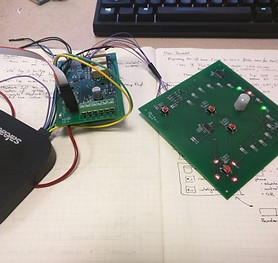
A CEC-supported, collaborative, multi-million dollar research project with the mission to enable intelligent heating, ventilation and air conditioning control in low-income households through the development of an appropriate low-cost smart thermostat.


RENES II ACTIVE
(Extending RENES)
RENES & RENES II
Estimating the power output of inherently intermittent and potentially distributed renewable energy sources is a major scientific and societal concern. RENES (Renewable Energy Estimator) is an award-winning interactive web-based tool that enables short-to-mid term forecasts of photovoltaic (PV) systems and wind turbine generators output. Renes comes complete with a web-based application program interface (API), thus enabling the user to fully exploit the tool's requests. In this context, RENES is employed by Artificial Intelligence and Multiagent Systems researchers, for activities such as accumulating data, designing experiments, or evaluating new algorithms. RENES is not a commercial product and is available to all, free of charge. Its traffic picked at ∼10,000 clicks/day before respective constraints were put in place at the end of 2016 to keep the service available free-of-charge
Website:
Video (Teaser):


ACTIVE
CompactAI is a hybrid machine-learning surrogate framework for rapidly predicting loading and unloading stress–strain behavior during pharmaceutical tablet compaction, replacing computationally expensive discrete element method (DEM) simulations. It combines four physically meaningful DEM parameters with neural-network coefficient prediction, equation-based curve reconstruction, and a classifier for catastrophic unloading collapse.
Dataset:


ACTIVE
Agr-IoT
Small farmers today do not employ automated irrigation systems as the cost is typically prohibitive to them. This project aims at promoting irrigation automation to conserve on-farm resources via the development of a low-cost, expandable, open-source farm network infrastructure and operating system to primarily support efficient irrigation practices.

PAST
XBOS-DR
The services demanded of commercial building customers—heating, cooling, ventilating, lighting, computing, and plug loads—require significant energy and contribute to peak energy demand. The project goal is to improve energy efficiency by enabling effective management and integration of demand response associated with tariff schedules and distributed generation with other building services in residential and commercial buildings by developing a system architecture supporting demand-response message passing and translation between the smart grid and the XBOS-DR building management system.


PAST
iGWAVE
This interdisciplinary project aimed at developing machine learning-based gravitational wave identification methods to empower the LIGO pipeline. It succeeded a sensitivity study on r-mode gravitational wave signals from newborn neutron stars illustrating the applicability of machine learning algorithms for the detection of the long-lived gravitational-wave transient.


PAST
ROLLAM
The dawn of large language models like BERT and GPT-3 is set to unleash a revolution in the way we experience life. Working, learning, and interacting with humans and the digital world will never be the same again as these models pave the way to a new era. As we entrust these powerful models with critical tasks and sensitive decision-making, ensuring their unwavering performance becomes an absolute
necessity. However, these systems suffer from non-robust performance, casting a shadow of
uncertainty over their potential.
This project aims to fortify the robustness of large language models and certify their performance.


PAST
iAgriculture DMS
Intelligent agriculture technology has the potential to revolutionize today's agriculture practices and has been held as a crucial component of sustainable agriculture. iAgriculture DMS aims to develop the necessary data management technology to support user-friendly and effective intelligent agriculture technology with an emphasis on precision irrigation.


PAST
XBOS-V
This interdisciplinary project focuses on controlling the charging of plug-in electric vehicles (PEVs) in residential and small commercial settings using a novel and flexible open-source, open-architecture charge communication, and control platform. This software-based platform will be embedded in the context of overall utility and residential/business electrical and building automation systems, lending itself to potential broad implementation by commercial interests. The project also focuses on the key issues associated with the development of the open-source platform including assessment of user needs and grid operation and ratepayer benefits, grid security considerations, and the potential for PEV charge control to lead to increased ability to accept intermittent renewable energy for California’s electrical grid.


PAST
ORCHID
An award-winning, EPSRC-supported, multi-million pound, collaborative research endeavor with the mission of delivering the science of human-agent collectives and applying it to the critical domains of the smart grid, disaster response, and citizen science. In this context, ORCHID explored the features of flexible autonomy, agile teaming, incentive engineering, accountable information infrastructure.

Publications
Please consider my Google Scholar Profile for an up-to-date list
Note: Some of my publications and complementary material can be downloaded here (password-protected)
My teaching spans artificial intelligence, machine learning, simulation, formal methods, research methods, and foundational computer science, with an emphasis on active learning, accessible course design, and research-oriented education.
Artificial Intelligence & Machine Learning
AI & Society · Reinforcement Learning · Bio-Inspired Machine Learning · Principles of Artificial Intelligence
Research & Scientific Practice
Research Methods and Ethics in Computer Science · Introduction to Research · Computer Science Colloquium
Core Computer Science
Simulation · Formal Languages and Automata · Foundations of Computer Science · Compiler Design

“The art of teaching is the art of assisting discovery.”
— Mark Van Doren
“The value of a college education is not the learning of many facts but the training of the mind to think.”
— Albert Einstein
“I don’t know how to teach. I’m a professor!”
— Professor Farnsworth, Futurama
Teaching & Mentorship
2025 Faculty Provost’s Excellence in Teaching Award
Fresno State’s highest faculty honor.
4.70 / 5.00
Average annual overall teaching evaluation, 2021–2026
4.80 / 5.00 in 2026
40+ students mentored
Across undergraduate research, graduate research, theses, and externally supervised projects. Former mentees have progressed to Ph.D. programs and faculty appointments at institutions including Auburn, Minnesota, Edinburgh, Imperial College London, UCF, and South Carolina
Current & Recent Courses

CSci 102
AI and Society
This course introduces AI within a historical framework that traces the evolution of technological systems from manual societies through mechanization, automation, and the rise of AI and machine learning. Students are introduced to the fundamentals of AI, scientific inquiry, and philosophical and ethical reasoning as tools for evaluating emerging technologies. The course examines, among others: autonomous warfare, AI and surveillance, data privacy, digital addiction, behavioral modification, algorithmic bias, intellectual property, data annotation, deepfakes, system vulnerabilities, cognitive biases, responsible use of AI, AI governance and regulation.
Evaluation: TBD
New course, zero-cost (expected)
The respective course materials are hosted on canvas.

CSci 154
Simulation
A computer simulation is a generally approximate imitation of the operation of a process or a system based on a respective model using a computer. Computer simulation is a powerful tool for the study of complex systems in computer science, statistics and operations research. This course covers the basic principles and phases of computer simulation, including a review of the basic principles behind and examples of simulation languages with a focus on the Python programming language. Particular emphasis is given on data mining and modeling, as well as on generating random variables, as an integral part of the computer simulation process.
Evaluation: 4.80/5.00
Designed from scratch; zero-cost
The respective course materials are hosted on canvas.

CSci 165
Bio-inspired Machine Learning
Bio-inspired machine learning is a field of study which seeks to solve computer science problems using models of biology. It relates to connectionism, social behavior, and emergence. This course focuses on selected bio-inspired machine learning topics with an emphasis on metaheuristics, optimization, computational neuroscience, and learning. Topics include evolutionary algorithms, ant colony optimization, simulated annealing, gradient descent, learning theories, artificial neural networks, self-organizing maps and reinforcement learning.
Evaluation: 4.82/5.00
New course; zero-cost
The respective course materials are hosted on canvas.

CSci 201
Computer Science Colloquium
This class aims to provide hands-on experience in computer science research methodology and academic writing, and academic presentation best practices.
Evaluation: 5.00/5.00
Designed from scratch; zero-cost
The respective course materials are hosted on canvas.

CSci 202
Research Methods and Ethics in Computer Science
This class provides an orientation into the graduate program and an introduction to the computer science research methodology, including topics on academic writing and publishing, as well as on intellectual property and academic honesty. It also introduces academic writing and academic presentation best practices and provide hands-on experience.
Evaluation: 4.80/5.00
New course; zero-cost
The respective course materials are hosted on canvas.

CSci 265
Reinforcement Learning
Reinforcement learning lies in the intersection of mathematics, computer science, engineering, economics, neuroscience and psychology, and deals with designing agents that interact in unknown and stochastic environments. It has produced some extremely successful applications in domains ranging from game playing to manufacturing and is a highly active area of research. This course covers the basic concepts and current trends in reinforcement learning, including the theory of Markov decision processes, dynamic programming, temporal difference learning, Monte Carlo methods, and the role of function approximation.
Evaluation: 4.98/5.00
New course; zero-cost
The respective course materials are hosted on canvas.

CSci 166
Principles of Artificial Intelligence
Artificial intelligence is intelligence demonstrated by machines. The respective field of study focuses on the science needed to develop intelligent and autonomous agents. This course covers the principles of artificial intelligence. Topics include agent theory, optimization, unsupervised learning, supervised learning, and reinforcement learning.
Evaluation: 4.60/5.00
Designed from scratch; zero-cost
The respective course materials are hosted on canvas.

CSci 119
Introduction to Formal Languages and Automata
This course aims to foster a deep understanding of fundamental machine models and their recognized languages, preparing students to apply these concepts across computer science fields like programming, parsing, and computational theory.
Evaluation: 4.70/5.00
Designed from scratch; zero-cost
The respective course materials are hosted on canvas.

CSci 60
Foundations of Computer Science
Computer science spans a range of topics from theoretical studies of algorithms and the limits of computation to the practical issues of implementing computing systems. This course covers the foundations of computer science including logic, discrete mathematics, and aspects of computation. Particular emphasis is given to abstraction, iteration, induction, recursion, complexity of programs, data models, and logic. The course consists of 3 lecture and 2 lab hours and is also supported by supplemental instruction.
Evaluation: 4.85/5.00
Designed from scratch; immediate access
The respective course materials are hosted on canvas.

CSci 134
Compiler Design
Compilers are fundamental to modern computing. They act as translators, transforming a human-oriented programming language into a computer-oriented machine one. Apart from being able to design such systems, compiler theory can also support better coding practices. This course offers comprehensive coverage of compiler theory. It covers the syntax and semantics of programming languages and the main phases of the compilation process (i.e., lexical analysis, parsing, semantic analysis, code generation, and optimization). Emphasis is given on lexical analysis, several parsing techniques including SLR and LALR parsing, parser generators, the role of symbol table organization, and semantic action routines.
Evaluation: 4.70/5.00
Designed from scratch; zero-cost
The respective course materials are hosted on canvas.

CSci 200
Introduction to Research in Computer Science
This class aims to provide an orientation into the graduate program and an introduction to the computer science research methodology, including topics on academic writing and publishing, as well as on intellectual property and academic honesty. It also aims to introduce academic writing and academic presentation best practices.
Evaluation: 4.90/5.00
Designed from scratch; zero-cost
The respective course materials are hosted on canvas.
NA
Workshop in Python
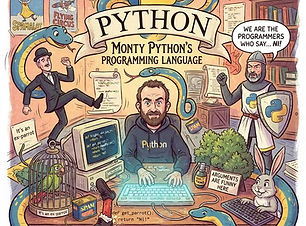
An end-to-end workshop covering Python fundamentals, advanced programming concepts, and idiomatic “Pythonic” practices, with an emphasis on writing clear, efficient, and maintainable code.
Evaluation: NA
Designed from scratch
The respective course materials are hosted on canvas.
“One of the best courses I've taken at Fresno State.”
— Anonymous student
“I found the presentation and organization of the course to be phenomenal. The topics were interesting, relevant, and well taught.”
— Anonymous student
“Student engagement was very high. Professor created an environment that was welcoming of questions, mistakes, and conversation.”
— Anonymous student
“Professor Panagopoulos made sure we understood the material before moving on. If this meant that we would need to slow down during a section, he was happy to do so.”— Anonymous student
“Professor is really engaging, encourages participation and cares about student success. Content is ideal and meaningful towards our degree. Projects are fun and offer opportunity for hands-on experience.”
— Anonymous student
“Very engaging and interactive instructor, who succeeded in highlighting the importance and the fun to be had of the material.”
— Anonymous student
“The class was fun, and included lots of activities instead of just reading off slides the whole lecture. Everything was explained well and was easy to follow.”
— Anonymous student
“Thanos is an excellent instructor. He realizes that in order to learn, more than exams is required. The focus on learning specifically rather than memorizing … is probably some of the best I've seen for the CSCI department.”
— Anonymous student
Featured Talks & Media
AI and Global Journalism
Global Investigative Journalism Conference, 2025
AI, Society and Education
Fresno State, 2025
AI in the Central Valley
KMPH FOX26 Town Hall, 2026
Artificial Intelligence 101
Marc Kapetan Show, 2025
Speaking, Consulting & Advisory
I am available for selected speaking, consulting, and advisory engagements related to artificial intelligence, machine learning, intelligent systems, technology and society, and the themes of Rage Against the Autonomous Machine.
Engagements may include invited talks, panels, workshops, AI strategy, system design and evaluation, research and development, and technical advisory work.

Thanos Panagopoulos
Associate Professor of Computer Science
Founder/Director, Artificial Intelligence & Intelligent Systems (AIIS) Lab
Fresno State
Science II Building #248
2576 E. San Ramon Avenue
M/S ST90 Fresno CA 93740, USA
+1 559-278-5152
apanagopoulos@mail.fresnostate.edu
apanagopoulos.com
